
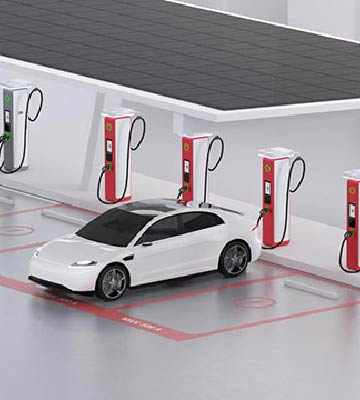
Electric vehicle charging networks need more than powerful chargers and suitable locations. Every charging station needs a system that connects it to a management platform capable of monitoring performance, managing sessions, tracking faults, and organizing energy use. This is where OCPP becomes important as one of the main protocols that help build more flexible and scalable charging networks.
With OCPP, charger operation and management become easier, especially in projects that include multiple stations or serve different user groups. Continue reading this guide to understand how OCPP helps standardize EV charging systems, connect chargers with smart platforms, support network expansion, and improve the user experience as charging infrastructure grows.
How OCPP Helps Standardize EV Charging Systems
OCPP helps standardize communication between chargers and management platforms, so every charger is locked into one closed system or a single software provider. This is important when building EV charging networks because operators may need to use chargers from different manufacturers or manage several locations from one central platform.
This standardization is useful because it helps:
- Connect chargers with different management platforms.
- Reduce dependence on closed systems.
- Manage several locations from one dashboard.
- Monitor charger status and charging sessions.
- Add new chargers more easily in the future.
Without OCPP, a network operator may face difficulty integrating different chargers into one system. With a standardized protocol, operation becomes more organized, and future upgrades become less complicated.
| Comparison Point | Chargers Supporting OCPP | Chargers Without OCPP |
| Connection with management platforms | More flexible | Usually limited |
| Fault monitoring | Easier through the system | May require manual follow-up |
| Future expansion | Easier to support | May require system replacement |
| Multi-site management | Possible from one platform | Less flexible |
| Remote control | Available depending on setup | Limited or unavailable |
Consequently, OCPP support has become an important factor when selecting chargers, especially for commercial projects or sites that plan to expand later.
The Role of OCPP in Connecting Charging Stations with Smart Systems
- Modern charging stations do not work as separate devices. They need a continuous connection with a management platform that can receive data and send commands.
- OCPP supports this connection by allowing operational data to move between the charger and the central system.
- Through this connection, the operator can see charger status, number of sessions, energy consumption, faults, and connection condition.
- The system may also allow operators to start or stop a charging session or adjust certain settings depending on the charger and platform features.
- This becomes especially useful in sites with more than one charger.
- When several chargers are installed in commercial parking areas, offices, or public facilities, it becomes difficult to monitor each charger separately. Smart systems supported by OCPP make operation clearer and faster.
- OCPP also supports practical functions such as remote diagnostics, performance monitoring, and fault notifications.
- This can reduce the need for a site visit every time a fault appears, and it helps the technical team understand the issue before reaching the charger.
Read also: EV Charger Installation Complete Guide for Homes and Businesses.
How OCPP Supports the Expansion of EV Charging Networks
Charging networks need to expand gradually as the number of electric vehicles increases. A project may start with a small number of chargers, then later require new locations, higher capacity, or different chargers within the same system. At this stage, OCPP becomes an important part of building a network that can grow.
OCPP supports expansion by helping operators:
- Add new chargers without replacing the full management system.
- Manage several sites from one platform.
- Support different chargers when they are compatible with the protocol.
- Monitor performance as the number of stations increases.
- Improve energy management when several chargers operate at the same time.
Expansion is not only about installing more chargers. Operators need to know charger status, load distribution, number of users, and energy consumption. OCPP helps turn separate chargers into a connected operating system.
In larger projects, such as commercial parking areas or public charging networks, this connection helps operators make better decisions. If one location is heavily used, the operator can consider adding another charger. If another location has repeated faults, the technical team can respond based on clearer system data.
Learn more about choosing chargers from our article: Best Home EV Charger in 2026: Top 7 Options You Should Consider.
The Importance of OCPP in Improving the EV User Experience
- The user experience does not depend on charging speed alone. Drivers need a charger that works when they arrive, a session that starts easily, clear status updates, and faster support when a problem occurs.
- OCPP helps improve this experience because it keeps the charger connected to a management system that can monitor status and respond to faults more quickly.
- With a connected system, the operator can know whether a charger is available, occupied, or out of service.
- Session data also helps understand usage patterns, peak times, and site needs. This improves the user experience by reducing downtime and increasing station readiness.
- OCPP also helps with user management. Some sites need different access levels for employees, visitors, customers, or residents.
- A management system can organize this process through cards, apps, or user accounts depending on the platform used.
- It can also improve transparency. When charging sessions and energy consumption can be tracked, it becomes easier to show charging cost, session duration, and charger status.
- This gives drivers a clearer experience compared with unmanaged or disconnected chargers.
The Future of OCPP with the Development of EV Charging Technologies
- As EV charging technologies develop, charging networks will need more flexible protocols. Charging is no longer just a vehicle connected to a power source.
- It is becoming part of a larger system that includes load management, smart energy, digital payment, remote maintenance, and possibly bidirectional charging in the future.
- OCPP helps support this development because it provides an open communication foundation between chargers and management systems. With newer versions, networks can become better prepared for security, data, and energy management requirements.
- In the future, charging stations are expected to depend more on data. Businesses will need to understand usage times, average session duration, fault rates, and user behavior.
- A protocol like OCPP helps collect this data and use it within a clearer operating system that supports better decisions.
In conclusion, OCPP is an important element in developing EV charging networks because it connects chargers with management systems, supports expansion, and improves performance monitoring and user experience. Its value becomes clearer in projects that plan to grow or need to manage several sites and chargers in an organized way. Current Power provides solutions that help you choose OCPP-compatible chargers and prepare a charging network that can be managed and monitored according to your site and actual needs.
Contact Current Power to choose smart charging solutions that support OCPP and help you build a more flexible and stable charging network.
FAQs About OCPP
It is not necessary for every simple use, but it is important when monitoring, remote management, multi-charger operation, or future network expansion is needed.
OCPP helps connect several chargers to one management platform, making it easier to monitor performance, sessions, faults, and consumption from one place.
It helps operators monitor charger status, reduce downtime, organize sessions, and provide a clearer charging experience for drivers.
OCPP is important in commercial projects that require user management, energy tracking, fault monitoring, and future charger expansion.
The main benefit is flexibility. OCPP helps connect chargers with different management systems and supports scalable charging networks.