
Can you imagine a world where you just use electric vehicles, and electric car charging at home is as routine as charging your phone overnight?
Switching to an EV isn’t just about changing your fuel source. It reflects adopting a new approach to energy use, given the different power levels and costs involved in powering your car. The idea of electric car charging at home has become essential for drivers, as it improves the ownership experience, cuts expenses, and supports Saudi Vision 2030. Read this article to discover the most efficient charging options available.
What Does Electric Car Charging at Home Mean?
Electric car charging at home means replenishing your vehicle’s battery using your household electricity, typically through a charger installed in your garage or near your parking spot.
- Electric car charging at home is usually done using a Level 1 or Level 2 charger.
- The time required for electric car charging at home depends on your battery size and the charger’s power output.
- You can easily schedule electric car charging at home to happen overnight, reducing strain on the electricity grid.
- Many modern chargers offer apps to monitor and control electric car charging at home remotely.
For these reasons, electric car charging at home has become the preferred choice for EV owners, offering comfort that enhances the daily driving experience.
How Do Public Electric Vehicle Charging Stations Work?
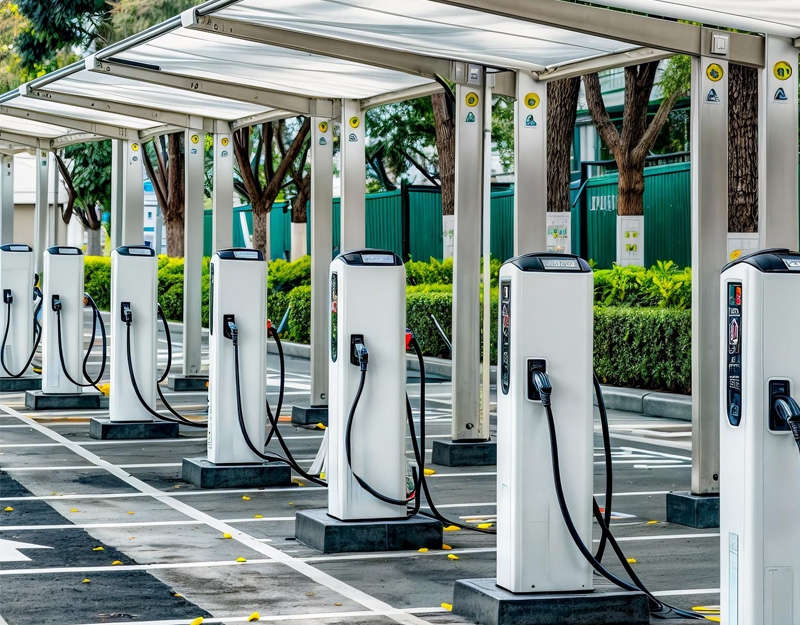
Public electric vehicle charging stations operate through a network of chargers located along roads, in parking lots, or at shopping malls. Understanding EV charging helps put home benefits in perspective.
Here’s how they generally work:
- Connect your car to the station’s charging port.
- Select a payment method via an app or card.
- The charging process starts immediately.
Station capabilities vary widely. Some offer slow charging, while others provide fast charging that tops up a battery quickly, a key feature of many modern electric vehicle charging stations. This is useful for long trips or emergencies. However, for daily use, electric car charging at home remains the most comfortable and practical choice.
Cost of Electric Car Charging at Home vs. Public Stations
Cost is a major factor influencing reliance on electric car charging at home. The table below offers an approximate cost comparison for different charging types in Saudi Arabia.
| Charging Type | Electricity Price per kWh | Cost to Charge a 60 kWh Battery | Approx. Cost per 100 km | Approx. Charging Time | Where It’s Typically Used |
| Home Charging (Residential) | 0.18 – 0.30 SAR | 11 – 18 SAR | 3 – 5 SAR | 4 – 8 hours | Daily home use |
| Standard Public Charging | 0.80 – 1.20 SAR | 48 – 72 SAR | 12 – 18 SAR | 1 – 3 hours | Malls and public parking |
| Fast Public Charging | 0.99 – 1.50 SAR | 59 – 90 SAR | 15 – 22 SAR | 20 – 45 mins | Highways and travel |
| Ultra-Fast Charging | Up to 2 – 3 SAR | 120 – 180 SAR | 30 – 45 SAR | 15 – 25 mins | High-power stations |
Charging Speed: Home vs. Public EV Charging
Charging speed varies based on the charger type and power output. The main distinction is between the AC power used for charging EVs at home and the DC power used for public fast chargers.
| Charging Type | Current Type | Approx. Power | Time for a 60 kWh Battery | Range Added per Hour | Most Common Use |
| Home Charging (Level 1) | AC | 1.8 – 2.4 kW | 20 – 40 hours | 6 – 8 km | Temporary use |
| Home Charging (Level 2) | AC | 7 – 11 kW | 4 – 8 hours | 35 – 60 km | Daily home use |
| Fast Public Charging | DC | 50 – 150 kW | 30 – 60 mins | 250 – 400 km/hour | Long-distance travel |
| Ultra-Fast Charging | DC | 250 – 350 kW | 15 – 25 mins | Up to 500 km/hour | Major highways |
Drivers use fast charging for long trips or quick boosts. But for everyday needs, electric car charging at home is the most practical solution, especially since you can charge overnight. Learn more about electric vehicle chargers here.
Advantages of Electric Car Charging at Home
Most EV owners prefer electric car charging at home for several reasons:
- Convenience: Charge without leaving your house.
- Lower Cost: Much cheaper than public fast charging.
- Overnight Charging: Charge while you sleep, fitting your routine.
- Smart Control: Manage schedules easily via smartphone apps.
- Battery Health: Slower charging is gentler on the battery over time.
Advantages of Using Public EV Charging Stations
Despite the popularity of electric car charging at home, public stations remain crucial.
- They provide fast charging for long road trips.
- They’re found in convenient locations like highways and malls.
- They’re vital for those without home charger access.
Disadvantages of Home EV Charging
While electric car charging at home is ideal for many, some face challenges:
- The upfront need for an EV charger installation in your home.
- Potential higher installation costs depending on your electrical setup.
- Lack of private parking for some drivers.
- Slower speeds compared to public DC fast chargers found at any charging station.
Many overcome these by consulting professionals, such as Current Power company, ensuring their electrical system is ready for electric car charging at home.
Challenges at Public Charging Stations
Drivers also encounter issues with public networks:
- Crowded stations during peak times.
- Price differences between networks.
- Waiting in line for an available charger.
This is why many prefer electric car charging at home for daily needs. Public challenges can be mitigated as more electric vehicle charging stations are built.
Factors Determining Your Best EV Charging Option
Before deciding, consider these points:
- Your daily driving distance.
- Access to off-street parking at home.
- Number of public charging points nearby.
- Electricity costs in your area.
Is Home Charging More Cost-Effective Long-Term?
Yes, electric car charging at home is generally more economical:
- Residential rates are much lower than public fast charging tariffs.
- It eliminates per-session fees charged by public networks.
- It allows integration with home solar power for greater savings.
How to Choose the Right Home EV Charger
- Choose a Level 2 charger for faster, practical charging.
- Ensure compatibility with your specific EV model.
- Use chargers certified by reputable manufacturers.
- Verify your home’s electrical panel can handle the load.
Do All Electric Cars Support Home Charging?
Most modern electric vehicles support electric car charging at home without issues.
- Cars typically include a basic cable for Level 1 charging.
- You can install a wallbox for faster Level 2 charging.
Thus, electric car charging at home is now a standard part of EV ownership.
The Role of Tesla-Approved Chargers
Tesla offers the Wall Connector, designed for efficient home charging.
Its key features include:
- Higher power output than standard outlets.
- Control via smartphone app.
- Advanced safety systems.
Electric car charging at home offers convenience that transforms EV ownership. Owners can plug in at night after work, ensuring the car is ready for the next day. This experience is enhanced by combining electric car charging at home with public stations, which provide fast solutions for long trips and urgent needs.
Frequently Asked Questions
- Can I rely completely on electric car charging at home?
Yes, for most with typical commutes, you can rely on electric car charging at home. It’s the most convenient and cost-effective method.
- How long does it take to charge at home?
With Level 2, electric car charging at home for a 60 kWh battery takes 4–8 hours—perfect for overnight charging.
- Does installation require electrical modifications?
Sometimes. EV charger installation might require upgrading your main electrical panel to handle the load safely.
- Does home charging affect battery lifespan?
Yes, positively. The controlled AC power used in electric car charging at home is less stressful than repeated high-speed DC fast charging.