
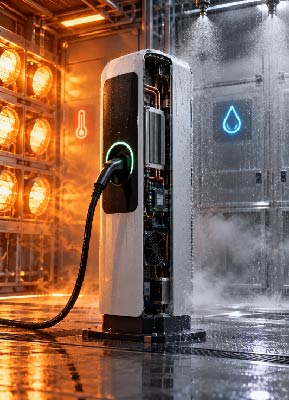
An electric vehicle charging station may work normally in the morning, only for its operator to notice reduced charging power or an interrupted session during the hottest part of the day. At another location, similar problems may appear after rainfall or a period of high humidity, even when the station is designed for outdoor use. Temperature, installation location, ventilation, enclosure protection, and the condition of cables and connectors all affect how electric vehicle charging stations perform under difficult weather conditions.
How Do Electric Vehicle Charging Stations Work?
Inside electric vehicle charging stations, protection systems monitor each charging session while internal components manage power delivery and communication with the vehicle. Some stations also use ventilation or cooling systems to keep internal temperatures within the equipment’s permitted operating range.
With AC charging, the vehicle’s onboard charger converts alternating current into DC. DC fast charging stations perform this conversion inside the charging unit before delivering direct current to the battery. Heat management is therefore especially important in higher-powered stations, particularly when several vehicles charge one after another.
Environmental requirements also differ between models. Manufacturers specify operating temperature ranges, protection ratings, and installation conditions for each unit. Check these details before selecting equipment for a location exposed to direct sunlight or rain.
For a comparison of charging categories and their applications, see Electric Vehicle Charging Stations, Their Types and Uses in Homes and Businesses.
How Do High Temperatures Affect Electric Vehicle Charging Stations?
Imagine a fast-charging station serving several cars back-to-back around midday. Outside temperatures are high, the station is exposed to direct sunlight, and its internal components have been working under a heavy load. The station may continue operating, but at lower charging power to limit further heat build-up.
This protective measure is known as Thermal Derating. It allows electric vehicle charging stations to automatically reduce charging output when internal temperatures rise, keeping electrical components within safe operating limits. Kempower explains in its official operating manual that derating may be activated during a charging session when the unit becomes excessively hot.
If your station starts delivering less power than usual, do not immediately assume it has developed a fault. Start by checking:
- Whether the charging unit is exposed to direct sunlight.
- Whether there is enough space for air to enter and leave the unit.
- Any dust or debris blocking the ventilation openings.
- Whether reduced output continues after the temperature drops.
- Any heat-related warning or fault code on the charger or management platform.
When choosing equipment for an outdoor charging site, remember to check the model’s operating temperature range, protection rating, and installation requirements.
Our article, DC Fast Charger for Electric Vehicles: Features, Uses, and Selection Guide, covers the other factors worth reviewing before selecting a fast charger for your location.
The Effect of Humidity and Water on Electric Vehicle Charging Stations
One outdoor station may withstand rainfall without trouble, while another develops problems because moisture condenses inside the equipment or water enters through a damaged connector or cable inlet.
When comparing electric vehicle charging stations, check the humidity level each model can tolerate and how well its enclosure protects the internal components against water ingress.
Some manufacturers specify a maximum humidity level on the condition that condensation does not occur. For example, Alpitronic lists up to 95% non-condensing humidity for the HYC400, alongside an IP54 enclosure protection rating.
What does an IP rating mean, and why should you check it?
An IP (Ingress Protection) rating describes the level of protection an electrical enclosure provides against solid objects and water, according to IEC 60529.
However, an outdoor protection rating does not mean the charger can be installed anywhere or exposed to standing water regardless of the manufacturer’s stated limits.
Before approving an installation location, check how rainwater drains away from the station. Inspect the enclosure, connectors, and cable entry points against the manufacturer’s requirements. The words “suitable for outdoor use” on a specification sheet should never be your only installation criterion.
Why Do Electric Vehicle Charging Stations Fail in Harsh Weather?
Have you noticed charging power dropping around midday or a charging point repeatedly stopping after a rainy night? Before blaming the weather alone, pay attention to the symptoms and the condition of the equipment.
The causes of failure in electric vehicle charging stations can vary depending on what the unit has been exposed to and how its components are performing.
Here are several situations you may encounter and what should be examined in each case:
| What you notice at the station | What requires checking |
| Charging power drops during hot weather and returns later | Internal temperature, ventilation, and possible activation of Thermal Derating |
| Charging stops shortly after a session begins | Cooling system, air vents, connectors, and fault messages |
| The same problem repeated after rainfall | Enclosure, cable entry points, connectors, and drainage around the installation |
| Moisture appears inside the charging connector | Connector condition, insulation, and the source of moisture before the point is used again |
| The circuit breaker trips repeatedly in hot conditions | Electrical load, connections, breaker condition, and possible effects of heat |
| Corrosion or damage appears on external components | Enclosure and connection integrity, and whether the equipment suits the site conditions |
A lower charging rate on a hot day does not necessarily mean the station is faulty. Similarly, a charger that stops after rainfall should not automatically be treated as a software issue that can be resolved by restarting it.
When should you take a charging point out of service?
If you notice an unusual smell, a damaged cable or connector, signs of water inside the equipment, or repeated protection-system trips, stop using that charging point and arrange an inspection by a qualified technician. Avoid opening the enclosure or attempting internal repairs yourself.
If charging interruptions continue even in moderate weather, the cause may lie in the electrical supply, charging cable, communication system, or protective components.
For a closer look at these faults and how to address them, read Why Does Your Electric Vehicle Charger Stop Working Unexpectedly?.
How Can You Protect Electric Vehicle Charging Stations from Weather-Related Failures?
Protecting a station against heat and moisture starts before the first fault message appears. The charger model, installation location, and site preparation can all make a difference to its operation.
Before installing electric vehicle charging stations, review the following:
- Operating temperature: Choose equipment rated for the temperatures expected at your location. Always refer to the specific model’s technical datasheet.
- Sun exposure: Select a location that reduces direct sunlight where recommended by the manufacturer, without obstructing the charger’s airflow.
- Protection rating: Check the model’s IP rating and whether it matches the site’s exposure to dust and water.
- Water drainage: Avoid installing the station where rainwater or cleaning water collects around its base.
- Cables and connectors: Inspect for cracks, wear, and damaged connector covers or holders, particularly on outdoor units.
- Ventilation openings: Keep them clear of dust and obstructions, and follow the manufacturer’s cleaning instructions.
- Monitoring: Watch for temperature warnings, fault messages, and changes in charging output instead of waiting until the station stops completely.
- Inspection after harsh weather: If the station has been exposed to unusual water accumulation or shows signs of damage, arrange an inspection before returning it to service.
For the electrical preparation needed before installation, including ventilation, earthing, protection systems, and cable routing, read EV Charger Installation and the Most Important Technical Requirements Before Installation.
A charging station’s ability to operate in hot or humid weather depends on its technical specifications, installation location, and maintenance. Choosing equipment suited to the site, then checking ventilation, drainage, and cable condition, can help identify problems before they lead to repeated charging interruptions. Current Power provides charging station planning, installation, operation, and maintenance services, including site assessment before installation.
Contact Current Power to assess your charging location and choose equipment suited to its operating conditions.
Frequently Asked Questions About Electric Vehicle Charging Stations and Weather Conditions
Check the manufacturer’s approval for outdoor use, operating temperature range, IP rating, and installation instructions. A product description that says “weather-resistant” is not enough without reviewing these specifications.
Follow the manufacturer’s instructions and check whether ventilation is blocked or the equipment is exposed to conditions outside its permitted operating range. If the warning returns or charging remains interrupted, arrange a technical inspection rather than bypassing the protection system or opening the unit.
Use the cleaning method specified by the manufacturer. Some manufacturers recommend wiping external surfaces with a damp cloth and warn against directing pressurized water at the charger or connectors.
Standing water around the station, moisture inside a connector, enclosure damage, or repeated faults and protection-system trips after rain are signs that the charging point should be taken out of service and inspected before use resumes.