
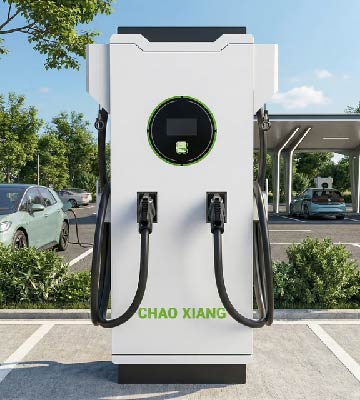
Choosing a DC fast charger is different from choosing a regular home charger. This type of charger is usually not designed for slow daily charging, but for locations that need higher speed, heavier usage, and a better experience for drivers who cannot wait for several hours. Its value appears in public charging stations, commercial parking areas, highway stops, fleet depots, hotels, and locations that receive a large number of electric vehicles every day.
When planning to install a DC fast charger, charging power should not be the only factor. The site type, vehicle flow, driver waiting time, electrical capacity, connector type, and station management system all affect the final decision. This guide explains how a dc fast charger works, its main advantages, and how to choose the right solution without paying for more capacity than the site actually needs.
What is a DC fast charger for Electric Vehicles?
A DC fast charger is a high-speed EV charger that uses direct current to charge the vehicle battery faster than standard AC chargers. The main difference is that the charger converts electricity to direct current before sending it to the vehicle, allowing higher power delivery in a shorter time.
A dc fast charger is usually used in sites that need faster charging, such as:
- Highway charging stations.
- Shopping centers and malls.
- Large company parking areas.
- Public EV charging stations.
- Fleet and delivery vehicle depots.
- Hotels and facilities that offer charging as a service.
This does not mean that a dc fast charger is suitable for every location. At home, an AC wall charger is often enough for daily use because the vehicle usually stays parked for many hours. In public or commercial locations, time becomes more important, and this is where fast charging becomes more useful.
It is also important to know that charging speed does not depend on the charger alone. A dc fast charger may provide high power, while the vehicle may not use the full capacity if its battery system or charging limit does not support it. This is why charger, vehicle, and site compatibility should be checked together.
How does a DC fast charger Work?
- A DC fast charger supplies the vehicle battery with direct current after converting power inside the charging unit itself.
- In AC charging, the vehicle’s onboard charger converts AC power into DC power. In DC charging, this conversion happens outside the vehicle, which allows higher charging power and faster charging.
- The charging process usually starts when the connector is plugged into the vehicle. The charger then communicates with the car to check compatibility, battery condition, temperature, and the amount of power the vehicle can accept. After that, the charger sends energy within safe limits set by the vehicle and charging system.
- This process helps make charging safer because the charger does not send maximum power without control.
- Charging power changes according to battery condition and state of charge. This is why charging is often faster when the battery level is low, then slows down as the battery gets closer to a higher percentage.
- A dc fast charger needs stronger electrical infrastructure than most home chargers because its power levels and operating current are higher.
- The site should be checked for panel capacity, transformer capacity, breaker size, cable size, earthing, and protection systems before installation.
Read also:Electric Vehicle Battery: How to Maintain Better Health While Charging and Extend Its Lifespan.
Features of a DC fast charger
A DC fast charger is designed for locations that need speed, reliability, and better charging session organization. These advantages become clear when the site serves many users or needs to reduce vehicle waiting time.
The main features of a DC fast charger include:
- Shorter charging time compared with AC chargers.
- Ability to serve more vehicles during the day.
- Suitability for commercial sites, highways, and fleet operations.
- Better experience for drivers who need a quick charge during travel.
- Added value for commercial locations that want to serve visitors.
- Possible integration with charging management platforms.
- Support for more than one connector or more than one vehicle in some systems.
The value of a DC fast charger also appears in projects that aim to build professional EV charging stations. A driver stopping at a highway station or shopping center does not want to wait for hours. The goal is to charge enough to continue the trip or return to daily use.
Still, a DC fast charger should be treated as an investment that needs proper planning. It costs more than an AC charger, requires stronger electrical preparation, and may need special infrastructure. For this reason, it should not be selected only because it is faster. It should be selected because it matches the site’s usage and expected traffic.
| Site Type | When is a DC fast charger best | Practical Note |
| Highway stops | When drivers need fast charging during travel | Higher power reduces waiting time |
| Shopping centers | When visitors stay for a short or medium time | Can improve the visitor experience |
| Fleets | When vehicles need to return to service quickly | Requires load management and scheduling |
| Large offices | When many users need charging access | A mix of AC and DC may be better |
| Homes | Usually not the first option | AC charging is enough for most daily use |
Learn more from: EV Charger Installation and the Most Important Technical Requirements Before Installation.
How to Choose the Right DC Fast Charger for Electric Vehicles
- Choosing the right DC fast charger starts with the site, not the maximum charging number.
- A high-power charger may suit a highway station or fleet depot, while it may be unnecessary for a small parking area with limited daily traffic.
- Start by defining the usage pattern. Will the charger serve the public? Is it for a private fleet? Will drivers stay for minutes or hours? These questions help define the suitable charging power, the number of connectors, and the management system needed.
- The available electrical capacity should also be checked. A DC fast charger requires a load study, and the site may need upgrades to the electrical panel, transformer, or cabling. Breaker size, earthing, protection systems, and cable routing should be reviewed before approving the charger.
- Connector compatibility is another key point. Many modern electric vehicles use fast charging connectors such as CCS, but connector standards can vary by vehicle and market.
- The selected charger should support the vehicles expected to use the site, especially if the station is public or commercial.
- Management systems can improve the operation of a DC charger. They help monitor sessions, track consumption, manage access or payment when needed, and detect faults faster.
- In sites with more than one charger, load management becomes important to avoid sudden pressure on the electrical network.
Before purchasing, review these points:
- Charging power suitable for the expected site traffic.
- Connector compatibility with the vehicles is expected.
- Electrical capacity available at the site.
- Need for a screen, payment system, or management platform.
- Outdoor durability and temperature tolerance.
- Maintenance access and technical support.
- Possibility of future expansion by adding chargers or increasing capacity.
To conclude, a DC fast charger is suitable for locations that need fast EV charging and the ability to serve more users in less time. Its real value appears when it is selected after a proper site study, not only because it offers the highest power. Current Power provides solutions that help you choose the right DC fast charger and prepare it safely and reliably according to your site and actual usage needs.
Contact Current Power to choose a suitable fast charger and prepare a reliable charging station for your commercial or operational needs.
FAQs About DC Fast Charger
It is usually not the first choice for homes because its cost and electrical requirements are higher than most daily charging needs. AC wall chargers are usually enough for regular home charging.
Charging speed depends on charger power, the vehicle’s charging limit, battery condition, temperature, and current state of charge.
An AC charger sends alternating current to the vehicle, and the vehicle converts it internally. A DC fast charger converts power inside the charging unit and sends direct current to the battery, which allows faster charging.
The site should be checked for electrical capacity, load requirements, breakers, cables, earthing, and protection systems before installation.
The right power depends on site type, expected number of vehicles, parking duration, and available electrical capacity. A technical site study is recommended before choosing the charger.