
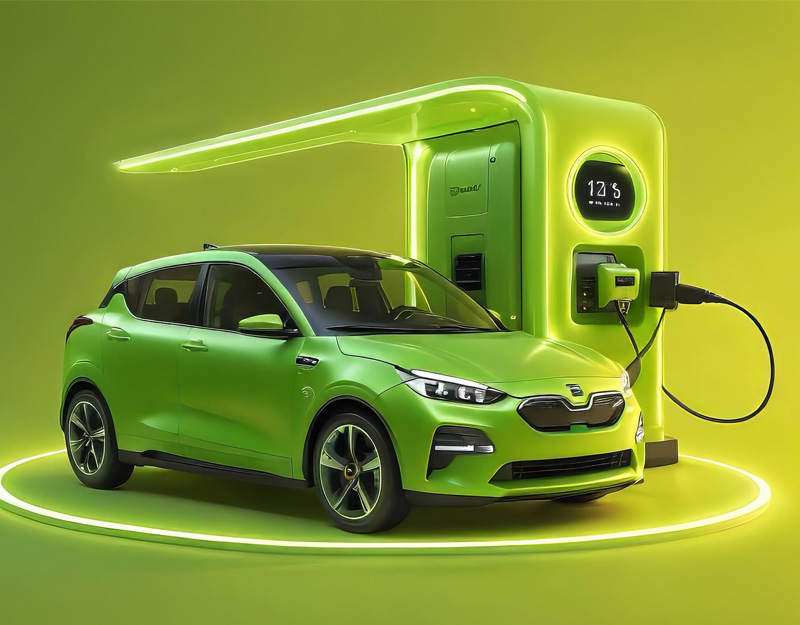
The first question any electric vehicle owner faces is not about driving, but about charging. When do you charge? Where? And with which charger?
An electric vehicle charger is your daily point of contact with the car. It determines charging time, safety level, and the stability of everyday use. A poorly informed choice can lead to longer waiting times or avoidable electrical issues.
In this practical guide by Current Power, we provide a clear and straightforward understanding of electric vehicle chargers. We explain the key differences between charger types, outline essential selection criteria, and clarify what you need to achieve fast and safe charging that fits your vehicle and location, without complexity or empty technical jargon. Before exploring the general types of electric vehicle chargers and their technical specifications, you may refer to this page to learn more about the charging solutions offered by Current Power across various types and brands. It serves as a practical reference before diving into the guide.
Types of Electric Vehicle Chargers
1. AC Electric Vehicle Chargers – 7 kW
What is it?
This charger operates on standard residential electricity (single-phase) and does not require special electrical upgrades.
When is it suitable?
- Stable daily use
- Overnight charging
- City driving
- Homes with limited electrical infrastructure
When is it not the best option?
- If you need fast charging within a few hours
- If you have more than one electric vehicle at the same location
Current Power Tip:
If your car is parked for 8–10 hours daily, this charger is more than sufficient. Extra speed adds no real value unless your usage pattern changes.
2. AC Electric Vehicle Chargers – 11 kW
What is it?
A charger that operates on three-phase electricity, offering faster charging than standard home chargers with better performance stability.
When is it suitable?
- Homes with strong electrical infrastructure
- Faster charging in shorter timeframes
- Users who drive longer distances daily
When is it not necessary?
- If your vehicle does not support more than 7 kW AC charging
- If the site’s electrical grid cannot support three-phase power
Current Power Tip:
Before purchasing this charger, make sure your vehicle can actually utilize 11 kW. Many users buy it only to discover their car charges at 7 kW instead.
3. AC Electric Vehicle Chargers – 22 kW
What is it?
The highest capacity among AC chargers, designed mainly for shared parking areas and commercial facilities.
When is it suitable?
- Companies
- Commercial buildings
- Hotels and residential complexes
- Multiple users sharing the same charger
When is it not recommended?
- Locations without robust electrical infrastructure
Practical Tip:
This charger is an operational investment, not a personal one. Its real value appears with multiple users, not a single vehicle.
4. DC Fast Electric Vehicle Chargers – 50 kW
What is it?
A DC charger that significantly reduces charging time compared to AC chargers.
When is it suitable?
- Public locations
- Workplace parking areas
- Urban charging stations
- Occasional fast-charging needs
When is it not sufficient?
- Highways
- High-traffic locations
- Commercial or heavy-duty vehicles
Current Power Tip:
A 50 kW charger is an excellent starting point for a charging station, but it is not a long-term solution once user demand increases.
5. DC Electric Vehicle Chargers – 100 kW
What is it?
A strong mid-range solution that balances charging speed and investment cost.
When is it suitable?
- Companies
- Vehicle fleets
- Commercial parking areas
- Semi-fast charging stations
When is it not the optimal choice?
- If the electrical infrastructure is weak
- If the location is designed for very short stops
Current Power Tip:
This charger type often delivers the best operational return on investment for many commercial projects.
6. Ultra-Fast DC Electric Vehicle Chargers – 150–240 kW
What is it?
The fastest charging category available, designed to minimize vehicle stopping time to the lowest possible level.
When is it suitable?
- Highways
- Long-distance travel stations
- High-turnover locations with heavy vehicle flow
- Vehicles that support ultra-fast charging
When is it not recommended?
- Small cities
- Low-usage locations
- Sites without a detailed electrical load study
Current Power Tip:
High speed without proper planning can turn into an unnecessary electrical burden and unjustified operating cost.
7. Electric Vehicle Chargers with Type 2 Connector
What is it?
A standard charging connector widely used in Europe. It works with AC chargers and is the most common option for home charging and daily use in both private and public parking areas.
When is it the right choice?
- Home charging
- Slow to medium charging
- European vehicles
Current Power Tip:
Always check the quality of the cable and connector. In many cases, charging issues are caused by poor accessories, not the charger itself.
8. Electric Vehicle Chargers with CCS Combo 2 Connector
What is it?
A standard connector used for DC fast charging. It is the primary standard for fast-charging stations across Europe and many global markets, enabling significantly shorter charging times compared to AC chargers.
When is it necessary?
- Any fast-charging station
- Any commercial charging project
- Any investment in public charging infrastructure
Current Power Tip:
CCS is the backbone of DC fast charging. Without it, available charging speed is severely limited.
9. OCPP-Compliant Electric Vehicle Chargers (Smart Chargers)
What is it?
A smart charger equipped with a management system that allows remote monitoring and control, such as tracking charging status, managing users, scheduling charging sessions, and calculating energy consumption, through systems compatible with the OCPP protocol.
When is it necessary?
- Companies
- Commercial projects
- Paid charging stations
- Energy consumption management
Current Power Tip:
If future expansion is part of your plan, choose a smart charger from the start. Retrofitting later is usually more expensive and more complex.
Practical Tips to Avoid Common EV Charger Problems
- Make sure the charger’s power rating matches your vehicle’s actual capabilities. A faster charger does not always mean faster charging.
- Inspect the site’s electrical infrastructure before installation to avoid repeated faults or circuit breaker trips.
- Avoid unapproved cables or accessories. They are a common cause of charging failures.
- Do not rely on frequent fast charging unless necessary, to maintain long-term battery stability.
- Choose chargers with built-in protection against overcurrent and overheating.
- In commercial locations, use smart chargers to manage loads and prevent stress on the electrical grid.
- Plan ahead, especially if you are considering adding another electric vehicle or expanding the charging point in the future.
Charging an electric vehicle should be a seamless part of your daily routine, not a source of stress or repeated questions. When the charger matches your usage and your location, everything flows naturally. You plug in, charge, and move on without overthinking.
In most cases, the issue is not the vehicle itself, but the charging decision behind it. That is why Current Power focuses first on understanding your actual needs. The goal is to turn charger selection from a confusing choice into a clear, reassuring decision that works for you today and continues to make sense over time.
Frequently Asked Questions (FAQ)
1. Can I use the same charger if I change my electric vehicle in the future?
In most cases, yes. As long as the charger follows a common charging standard and supports suitable power levels, it can be used with future vehicles. Choosing a flexible charger from the start helps avoid replacement later.
2. Does charging an electric vehicle significantly increase electricity bills?
The impact depends on charging habits. Regular charging, selecting the right power level, and managing charging times help control consumption and avoid unexpected increases.
3. Does daily charging damage the battery?
Daily charging at appropriate power levels does not harm the battery. Frequent use of fast charging without real need is the factor that has the greatest long-term impact.
4. Do I need special approvals or preparations before installing a charger?
In private homes, usually not. In apartments, shared buildings, or commercial locations, there may be regulatory or technical requirements that should be checked in advance.
5. What happens if the power cuts off during charging?
Modern chargers automatically stop when power is interrupted and safely resume charging once electricity is restored, without affecting the vehicle or the charging system.